Structural Solutions for Elevation and Erosion Control
Retaining Walls & Poured Concrete Walls in Newport for managing sloped terrain, preventing soil movement, and supporting elevation changes
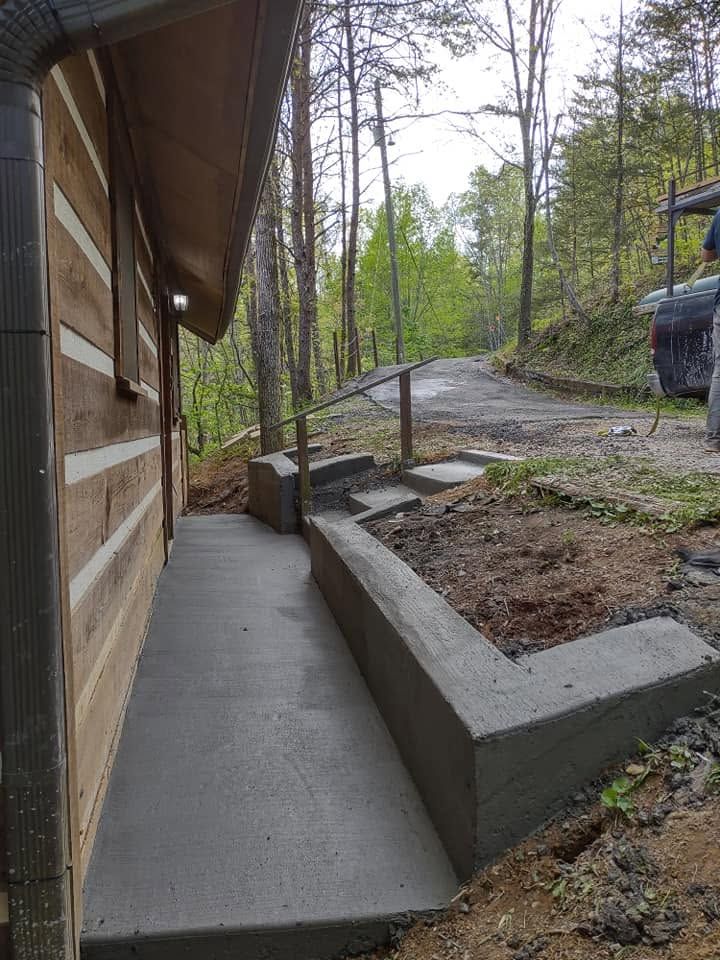
Rolling terrain throughout East Tennessee creates elevation changes that require structural support to prevent soil from washing downhill during heavy rain. Out Of The Blue Concrete LLC installs retaining walls, poured concrete walls, foundation walls, and site support structures that stabilize slopes, manage drainage, and create usable flat areas on properties where natural grade makes construction or landscaping difficult. Proper engineering ensures walls withstand lateral soil pressure without tilting, cracking, or failing over time.
Wall construction involves excavating to stable soil, installing drainage systems behind the wall to prevent hydrostatic pressure buildup, and pouring reinforced concrete designed for the specific load and height requirements. Drainage planning is critical because water trapped behind a retaining wall exerts force that can push even thick concrete out of alignment, which is why weep holes, gravel backfill, and perforated drain pipes form part of every installation.
Request a site evaluation and estimate to review how retaining walls can address grade issues on your property.
How Retaining Walls Address Slope Stability
Retaining walls function by resisting the outward pressure of soil trying to move downhill, using mass and reinforcement to counteract gravitational forces. Walls taller than four feet typically require engineering calculations to determine footing depth, wall thickness, and rebar placement, ensuring the structure handles both soil weight and water saturation during storms. The base footing extends below the frost line to prevent heaving during freeze-thaw cycles common in Newport winters.
Once installed, the wall holds soil in place, prevents erosion gullies from forming during downpours, and creates level terraces for lawns, gardens, or building pads where sloped ground previously made construction impractical. Water drains through the wall system rather than pooling behind it, and the concrete surface remains plumb and crack-free through seasonal temperature changes. Poured concrete walls provide long-term durability compared to stacked block systems that can shift as individual units settle at different rates.
Applications range from residential landscape terracing to commercial site grading, foundation walls for hillside construction, and erosion control along driveways or property boundaries. The design adapts to site-specific conditions including soil type, water table depth, and the total elevation change requiring support.
Common Questions About This Service
Wall projects raise questions about drainage, height limits, and structural longevity.
What determines retaining wall height and thickness?
Soil type, slope angle, and total retained height dictate wall dimensions, with taller walls requiring thicker concrete, deeper footings, and more reinforcement to resist the exponentially greater pressure from larger soil volumes.
How does drainage prevent wall failure?
Without drainage, water saturates the soil behind the wall and exerts hydrostatic pressure that can crack or tip even properly built structures, which is why gravel backfill and drain pipes redirect water away before pressure builds.
Can retaining walls be built on any slope?
Stable soil and adequate space for footings are necessary, though slopes too steep or soil too unstable may require soil stabilization or tiered wall systems rather than a single tall structure.
How long do poured concrete retaining walls last?
Properly constructed walls with adequate drainage and reinforcement last decades, often outlasting the structures they support, especially in the variable weather conditions found throughout the Lakeway Area where freeze-thaw cycles and heavy rain test structural integrity.
What finish options exist for concrete walls?
Walls can be left smooth, textured during pouring, or faced with stone veneer, depending on whether the application prioritizes function or appearance.
Out Of The Blue Concrete LLC evaluates soil conditions, drainage patterns, and structural requirements during site visits, ensuring every retaining wall installation addresses both immediate grade concerns and long-term stability. Arrange a property assessment to discuss how poured concrete walls can solve elevation and erosion challenges on your site.
